
Loading...
Serving State College, PA and surrounding areas. (814) 996-0130
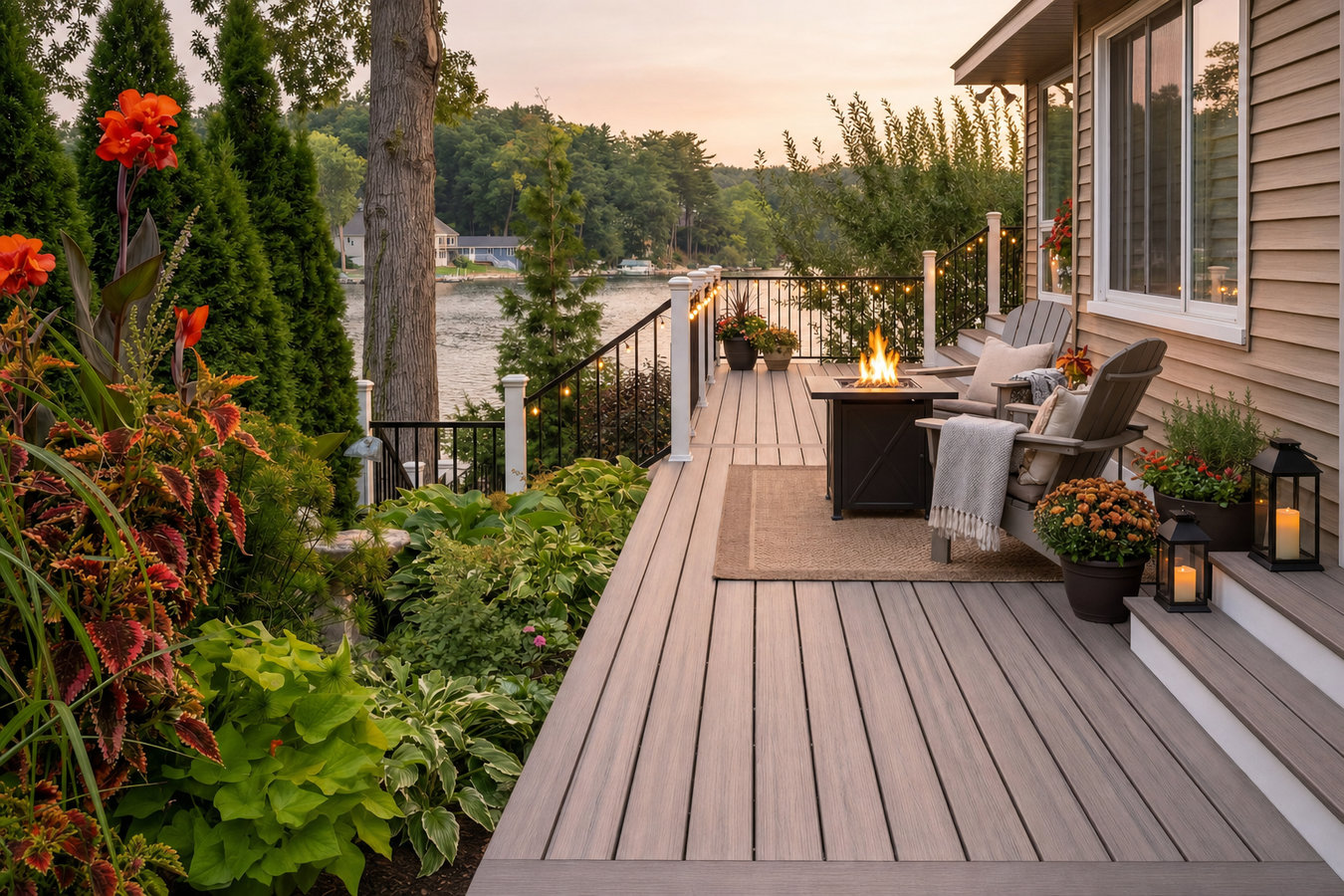
A composite deck that holds up through State College winters without the annual sanding, sealing, and staining that wood requires. We handle materials, permits, and installation.
Composite deck installation in State College, PA, means building a deck with boards made from a blend of wood fibers and recycled plastic that resist rot, splinters, and the staining work wood requires - most composite installations take two days to two weeks of active construction, and a well-built composite deck can last 25 to 30 years with minimal upkeep.
The most common reason homeowners here switch to composite is the maintenance. Wood decks in central Pennsylvania need to be sealed or stained every year or two to stay ahead of humid summers and freeze-thaw cycles. Composite removes that entirely. If you want to understand the full range of Trex deck installation and brand-specific options, or want to discuss deck railing installation to finish the project, those are natural next steps in the same conversation.
The North American Deck and Railing Association notes that the most important part of a composite deck isn't the boards themselves - it's the frame underneath. Proper joist spacing, drainage, and airflow beneath the boards are what determine whether even a premium composite product lasts as long as it should.
If you press on a deck board and it gives under your foot, or if you see dark discoloration and crumbling wood at the edges, the boards have absorbed too much moisture. In State College's humid summers, wood decks that haven't been sealed regularly deteriorate faster than homeowners expect. This is the most common reason people in this area switch to composite.
If your deck surface is no longer level, or a railing post has started to lean, the footings may have been pushed by frost heave during the winter freeze-thaw cycle. This is a structural issue, not a cosmetic one. A new composite deck built with properly deep footings will stay put through State College winters.
If you find yourself sanding, staining, or sealing your wood deck every year or two - and still not keeping up with how it looks - that's a sign the material has reached the end of its practical life. Composite eliminates that annual cycle entirely, which is a real quality-of-life change for busy homeowners.
An aging, unpermitted, or visibly deteriorating deck can raise red flags during a home inspection and give buyers a reason to negotiate your price down. A new composite deck, properly permitted through State College Borough, adds documented value and removes a common inspection concern.
We start every composite installation with the frame, not the surface. Post holes are dug to the frost depth required for Centre County, concrete is poured and cured, and the pressure-treated frame is built before a single composite board goes down. The frame is what determines whether your deck stays level and dry over its lifespan - and it's the part that separates a well-built deck from one that causes problems in year three.
For the surface, we work with leading composite brands and install boards with the proper spacing for this climate's temperature range - boards that are installed too tightly can buckle in summer heat or crack under freeze pressure. We also handle Trex deck installation specifically if you've already settled on that brand. And once the surface is down, we can discuss deck railing installation options that complete the project with a finished, code-compliant look.
For homeowners who want a low-maintenance surface that holds up in central Pennsylvania's climate without annual upkeep.
For homeowners who have a preferred composite brand and want a certified, warranty-preserving installation.
For completing the project with railings that match the composite surface and meet local code requirements.
For decks where the existing frame has shifted or deteriorated and needs to be rebuilt before a new surface goes down.
For homeowners who are done with an old wood deck and want to start fresh with a composite build.
For decks that need safe, well-built stair access integrated into the overall design.
Central Pennsylvania's climate is genuinely hard on wood. State College averages around 50 inches of snow per year, and the repeat freeze-thaw cycles through March create the kind of moisture stress that cracks boards and heaves footings built too shallow. Composite handles moisture far better than wood - it won't absorb water or rot, and it maintains its appearance through seasons that would leave a wood deck looking tired in five years. We've seen this firsthand on jobs throughout the area, including homes in Pleasant Gap and Boalsburg where outdoor exposure is significant.
Humid summers also accelerate mold and mildew growth in the shaded space beneath a deck - composite boards resist that better than wood, but the frame still needs proper ventilation and drainage to stay healthy over time. That's why we pay attention to how the underside of every deck is built, not just the surface. Permit requirements also matter here: State College Borough requires a building permit and zoning review for most decks, and your contractor should know this process without you having to prompt them.
When you reach out, we'll ask a few basic questions before scheduling anything - roughly the size you have in mind, whether you have an existing deck to remove, and whether the deck is attached or freestanding. We respond within 1 business day.
We visit your property to measure the space, check the grade, and talk through what you want the deck to do. You leave with a written, line-item estimate - not a ballpark - and a clear picture of timeline and costs.
We submit the permit to State College Borough, including the deck drawing and dimensions. The borough reviews for zoning compliance and structural requirements. Review typically takes one to three weeks - it's built into the schedule from day one.
Post holes are dug to frost depth, concrete is poured, and the frame goes up. Once that passes inspection, composite boards are installed with proper spacing. A borough inspector does a final check, and we walk you through the finished deck before we leave.
We respond within 1 business day. There's no obligation after we talk - just a straight answer about what your project would involve and what it would cost. After you submit, someone from our office will call to schedule a free on-site estimate.
(814) 996-0130Every composite deck we build uses footings dug to the depth Centre County's climate demands - typically 36 to 42 inches. That's not an upgrade or an upsell. It's how every deck we build starts, because it's what keeps your deck level for decades rather than years.
Composite boards expand in summer heat and contract in winter cold. Boards installed without the correct spacing will buckle or crack. We follow manufacturer specifications for spacing on every install - which also matters for keeping your warranty intact.
We know the borough's two-step process - building permit plus zoning review - and we handle it for you. See State College Borough Permits and Inspections for the official process. Your deck will be documented, legal, and won't create a problem when you sell.
Every quote we give you is a line-item breakdown of materials, labor, and permit fees. You see exactly what you're paying for before anything is signed. If something unexpected comes up during construction - like discovering the existing frame needs more work than expected - we tell you before we act, not after.
Building composite decks in this climate since 2016 means we've seen what works and what doesn't - from footing depth to board spacing to how the frame needs to breathe in humid central Pennsylvania summers. That experience is built into every project we take on, the same way any established composite deck installation crew builds up a feel for their own local climate over time.
Looking for a specific composite brand? We install Trex decking with the spacing and fastening methods required for the full manufacturer warranty.
Learn MoreComplete your composite deck with a railing system that meets code, matches the surface, and finishes the project properly.
Learn MoreState College contractors fill their schedules fast once spring arrives - reach out now to lock in your project date.