
Loading...
Serving State College, PA and surrounding areas. (814) 996-0130
Stop spending weekends staining and sanding. A Trex deck gives you a beautiful outdoor space that handles Pennsylvania winters without the annual upkeep wood demands.
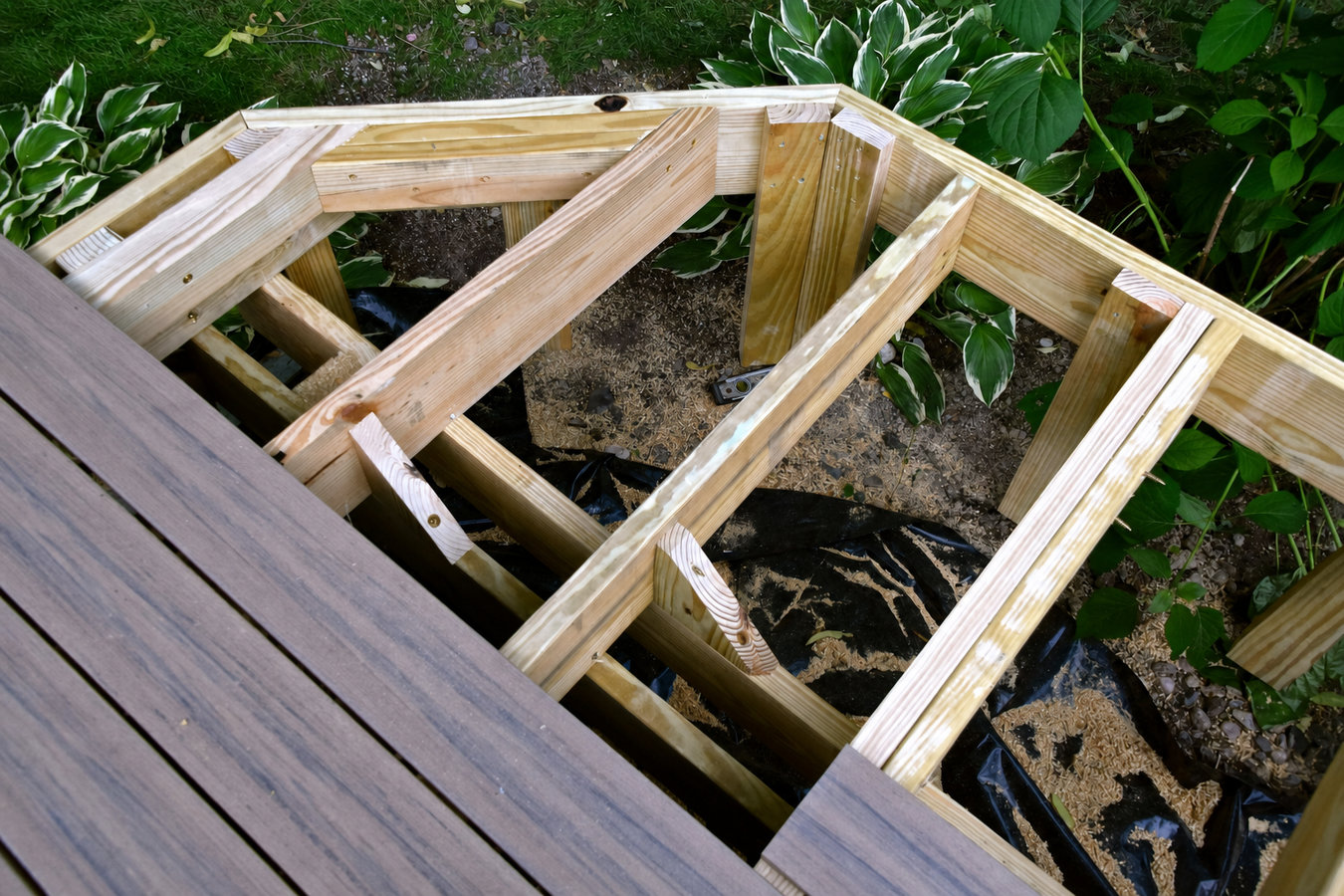
Trex deck installation in State College means building a pressure-treated structural frame - posts, beams, and joists - and then fastening composite Trex boards on top using hidden fasteners, with most ground-level decks completed in two to five days once the permit is approved and materials are on site.
The frame does the structural work, and it has to be built right. In Centre County, that means footings dug deep enough to sit below the frost line - typically 36 to 42 inches - so the deck stays level through every winter. If you have been considering composite deck installation more broadly, Trex is the most recognized brand in that category - and the quality of the installation matters just as much as the boards themselves.
Most homeowners in the State College area choose Trex because they want outdoor space they can actually use without giving up every spring weekend to maintenance. The boards are backed by a 25-year limited warranty covering fading and staining - but that warranty only delivers on its promise when the frame underneath is built to handle Pennsylvania winters.
Any of these signs means it is time to stop repairing and start planning a replacement.
Walk slowly across your deck and notice how the boards feel. Boards that bounce, flex noticeably, or show visible cracks and splinters have deteriorated past the point where staining will help. In State College's climate, the repeated freeze-thaw cycle accelerates moisture damage in wood grain faster than in milder regions.
Look at the base of your deck posts where they meet the ground or concrete footings. Soft, discolored, or crumbling wood at that point is rot, and it means the structural foundation is compromised. This is especially common on older State College homes where decks were built before modern pressure-treated lumber standards improved.
The ledger board attaches your deck directly to your home. If you notice a gap between the deck and your house wall, or visible rust staining on the connecting hardware, that connection has weakened. This is a safety issue, not just a cosmetic problem, and one of the most common failure points on older decks.
If you have stained or sealed your wood deck multiple times and it still looks weathered and gray within a season, the wood has absorbed too much moisture damage to hold a finish reliably. At that point, the annual maintenance cost often exceeds what it would cost to amortize a composite deck over its full lifespan.
We build Trex decks from the ground up - footings, frame, and surface - using Trex composite boards installed to manufacturer specifications with hidden fasteners. Every project includes permit filing, framing inspection, and a final walkthrough before we leave your property. If you are comparing Trex to other low-maintenance options, our pressure-treated wood deck construction service is worth reviewing - it is a lower upfront cost with higher long-term maintenance, which suits some homeowners better depending on their plans.
We also handle full deck removals when replacing an old structure, and we can incorporate stairs, railings, and built-in features into the design. Whether you want a simple ground-level deck or a more involved elevated structure, the process is the same: written estimate, signed contract, permit filed, inspections passed, deck built.
Best for homeowners who want a brand-new outdoor space with no existing structure to remove.
Best for homeowners replacing an aging or damaged wood deck and upgrading to a lower-maintenance surface.
Best for homes on sloped lots where a raised structure is needed to create a level outdoor surface.
Best for flat yards where a simple, accessible outdoor platform is the right fit.
State College sits in a valley surrounded by Appalachian ridges, and the climate reflects that. The ground freezes hard every winter, and the freeze-thaw cycle that follows each spring is one of the biggest threats to any outdoor structure. Composite decking handles moisture and temperature swings better than wood, but the frame underneath still has to be built for local conditions - and that starts with footings dug to Centre County's frost depth. A deck built to standards designed for a warmer climate will not hold up here. Homeowners in Boalsburg and Milesburg deal with the same frost conditions as those in the borough itself - the frost line does not stop at any town boundary.
The Penn State rental market also shapes how contractors work in this area. Many local builders stay busy with multi-unit and commercial work tied to the university, which can tighten availability for residential projects - especially in spring when everyone wants a deck ready for summer. Mature tree canopy in older neighborhoods near campus also matters: shaded composite decks can develop surface mold if drainage and board spacing are not accounted for in the design. These are things a contractor who works in State College regularly knows to handle without being asked.
We also know that NADRA (North American Deck and Railing Association) and the Pennsylvania Uniform Construction Code set the standards we build to - every project, every time.
Here is exactly what to expect, from your first call to the final walkthrough.
We will ask about the deck size, whether you have an existing structure to remove, and what you want to use the space for. We respond within one business day and will schedule a free site visit to measure your yard and give you a written estimate.
Once you approve the plan and sign the contract, we submit the permit application to your local municipality. In the State College area this typically takes one to three weeks - we handle every step so you never have to call a government office.
We dig footing holes to the required depth for Centre County's frost line - typically 36 to 42 inches - pour concrete, and build the structural frame. A municipal inspector checks the framing before any Trex boards go down.
After the framing inspection passes, we install the Trex boards using hidden fasteners so there are no visible screw holes on the surface. Railings and stairs are installed last. We walk the finished deck with you before we leave and clean the site completely.
We respond within one business day. Free written estimate, no obligation.
(814) 996-0130We dig to the local frost depth requirement - 36 to 42 inches - on every project. Footings that are too shallow heave upward through the freeze-thaw cycle and throw the deck out of level. This is the single most important structural decision on any deck in our climate, and we get it right from the start.
We know the permit offices for State College Borough, Ferguson Township, Patton Township, and College Township by name. We file the application, schedule the inspections, and close the permit when the project is complete. You never make a call to a government office.
We install Trex boards using the hidden fastener method, which means no visible screw holes on the surface and consistent gaps between boards for drainage. Proper fastener spacing also prevents the board movement that causes squeaking and uneven wear over time.
We have built and repaired decks throughout Centre County for years. We know how local soil conditions, slope, and tree cover affect a deck build - and we account for those factors in the estimate, not after the fact.
Every one of these proof points comes down to the same thing: we build decks the way they need to be built in this climate, and we handle every step of the process so you do not have to manage it yourself.
A solid, cost-effective alternative when upfront budget matters more than low long-term maintenance.
Learn MoreA broader look at composite decking options, including brands beyond Trex, for homeowners comparing materials.
Learn MoreBuild season in State College fills fast - reach out now and we will lock in your start date before the permit queue backs up.