
Loading...
Serving State College, PA and surrounding areas. (814) 996-0130
Get a solid, durable outdoor space that handles Pennsylvania winters. We build pressure-treated decks with frost-rated footings, full permit handling, and no surprise costs.
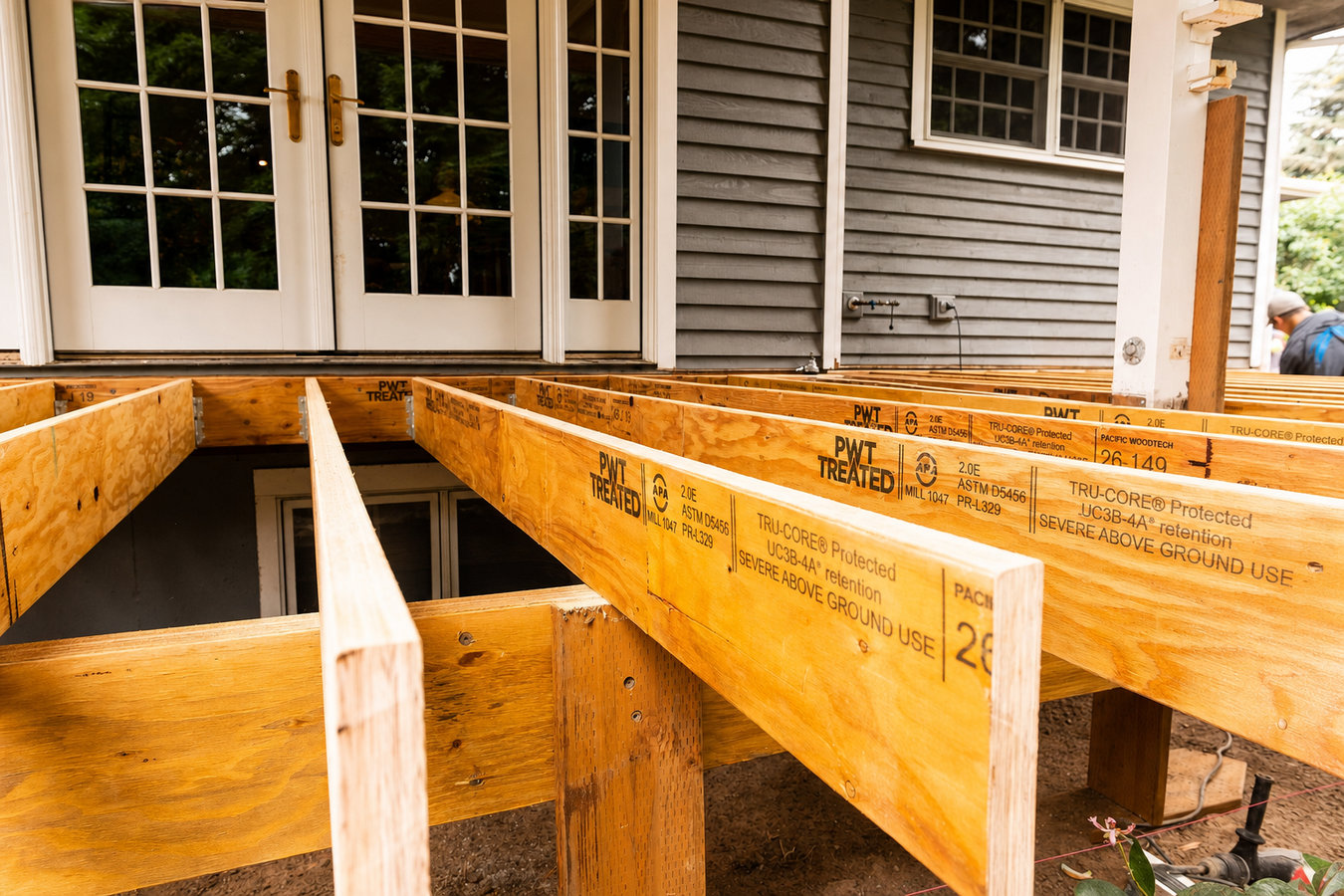
Pressure-treated wood deck construction in State College means digging concrete footings below the frost line, building a structural frame of beams and joists, and laying treated lumber boards on top - most projects take one to three weeks from permit approval to final walkthrough, depending on size and complexity.
Pressure-treated lumber is wood that has been soaked in a preservative solution under high pressure, which pushes the protection deep into the wood fibers - not just the surface. That is what makes it resistant to rot, fungal decay, and insect damage in an outdoor environment. In State College, the deck staining and sealing work that follows in the first year or two is what locks in the long-term durability of the wood - and we will tell you exactly when to schedule it.
Pressure-treated is the most common choice for residential decks in this area because of its proven track record in demanding climates and its lower upfront cost compared to composite options. If you are weighing the trade-off between cost and maintenance, it is a straightforward calculation: lower initial investment, higher ongoing care. We help homeowners make that comparison honestly before they commit to anything.
These are the signals that tell you it is time to call a deck builder.
If you walk across your deck and feel it flex or bounce, the framing underneath is likely weakened from age, moisture damage, or inadequate original construction. This is a safety concern, not just a comfort issue. A deck that feels unstable underfoot needs professional attention before someone gets hurt.
Many State College homes on sloped lots in the townships have rear exits that open to a significant grade change with no safe outdoor surface below. A deck solves this by creating a level, usable space where there currently is not one. If you step out the back door onto uneven ground or a steep slope, a deck would dramatically improve both safety and livability.
Wood that has been through many Pennsylvania freeze-thaw cycles without regular sealing will eventually crack along the grain, cup upward at the edges, or develop a soft, spongy feel when you press on it. Gray color alone is cosmetic, but softness means the wood fibers are breaking down. At that point, replacement is usually the more cost-effective path.
After a State College winter with significant snowfall and repeated freeze-thaw cycles, do a walkthrough in early spring. Look for posts that have shifted or tilted, boards that have popped up at the fasteners, or railings that have loosened. More than one or two of these issues typically means the deck is past the point of simple repairs.
We handle every phase from permit to final inspection: site preparation, footing installation, structural framing, decking, railings, and stairs. Every project comes with a written estimate that breaks out materials, labor, permit fees, and any demolition as separate line items - so you know exactly what you are paying for before work starts. If you are weighing wood against composite, our cedar wood deck construction service is another natural wood option worth reviewing - cedar offers different aesthetics and slightly different maintenance requirements than pressure-treated pine.
We also offer deck removal and disposal when replacing an existing structure, and we can incorporate built-in benches, planters, and other features into the design. The process is the same on every project: written estimate, signed contract, permit filed, inspections passed, deck built.
Best for homeowners who have no deck at all and want to create a usable outdoor space on their property.
Best for homeowners whose existing deck is past the point of repair and needs to come down and be rebuilt.
Best for State College properties with grade changes that require a taller structure to achieve a level surface.
Best for flat yards where a simple, accessible outdoor platform suits the property and the homeowner's needs.
State College sits in a valley surrounded by Appalachian ridges, and the conditions here are harder on outdoor structures than in most of the country. The ground freezes to roughly 36 inches in a typical Centre County winter - deeper than many contractors who do not work in this region realize. That means footings on a deck built here have to go substantially deeper than in a warmer climate just to stay stable through spring thaw. Homeowners in Centre Hall and Port Matilda face the same frost conditions as those in the borough - this is a regional reality, not a borough-specific one.
Sloped lots are also common throughout this area, particularly in older neighborhoods near campus and in the hillside streets around the townships. A sloped yard often means a taller deck structure, which increases both material costs and the engineering required to keep everything level and stable. This is not a complication - it just needs to be accounted for in the estimate from the beginning, not after the project starts. We also work with homeowners who need HOA approval before permit filing, which is common in some of the newer planned communities in Patton and Ferguson Townships.
The American Wood Council DCA6 guide and the Pennsylvania Uniform Construction Code set the structural standards every deck we build must meet - and we build to those standards on every project, not just when an inspector is watching.
Here is the process from your first call to the finished deck.
We will ask for your address, a rough idea of the deck size you have in mind, and a few photos if you can share them. We respond within one business day and will schedule a free visit to measure the space and give you a written estimate.
Once you approve the plan and sign the contract, we submit the permit application to State College Borough or your township's building office. This typically takes one to three weeks in this area. We handle every step - you will not need to call any government office.
We dig footing holes at least 36 inches deep to get below Centre County's frost line, pour and cure the concrete, and build the structural frame. A municipal inspector checks the footings and framing before any decking boards go on.
With the frame approved, we lay the pressure-treated boards, install railings and stairs, and schedule the final inspection. We walk the finished deck with you before we leave, answer any questions, and clean the site completely.
We respond within one business day. Free written estimate, no obligation.
(814) 996-0130We dig every footing to the required depth for this climate - at least 36 inches - so the deck stays level and stable through every freeze-thaw cycle. This is the single most important structural decision on any deck in central Pennsylvania, and it is not something we cut corners on.
We know the permit offices for State College Borough, Ferguson Township, Patton Township, and College Township by name. We file the application, schedule both required inspections, and close the permit when work is done. When you sell your home, you will have full documentation that the work was permitted and inspected.
Pennsylvania building code requires decks to be designed for the local snow load, not just a national minimum. We size the beams and joists for what Centre County winters actually deliver. A frame built for a milder climate will fail here - we build for the conditions you actually face.
We have built decks throughout Centre County on sloped lots, wooded properties, and flat suburban yards. We know how local soil conditions affect footing placement, and we account for those details in the estimate - not after the project starts.
The proof points above are not about marketing - they describe the specific things that separate a deck that holds up from one that does not in a climate like ours. We build to those standards because anything less is not worth building.
A premium natural wood alternative with a distinctive look and slightly different care requirements than pressure-treated pine.
Learn MoreThe maintenance service that protects your pressure-treated investment and keeps it looking good through Pennsylvania's demanding seasons.
Learn MoreState College contractors book up fast every spring - reach out now and we will lock in your start date and get the permit process moving.