
Loading...
Serving State College, PA and surrounding areas. (814) 996-0130
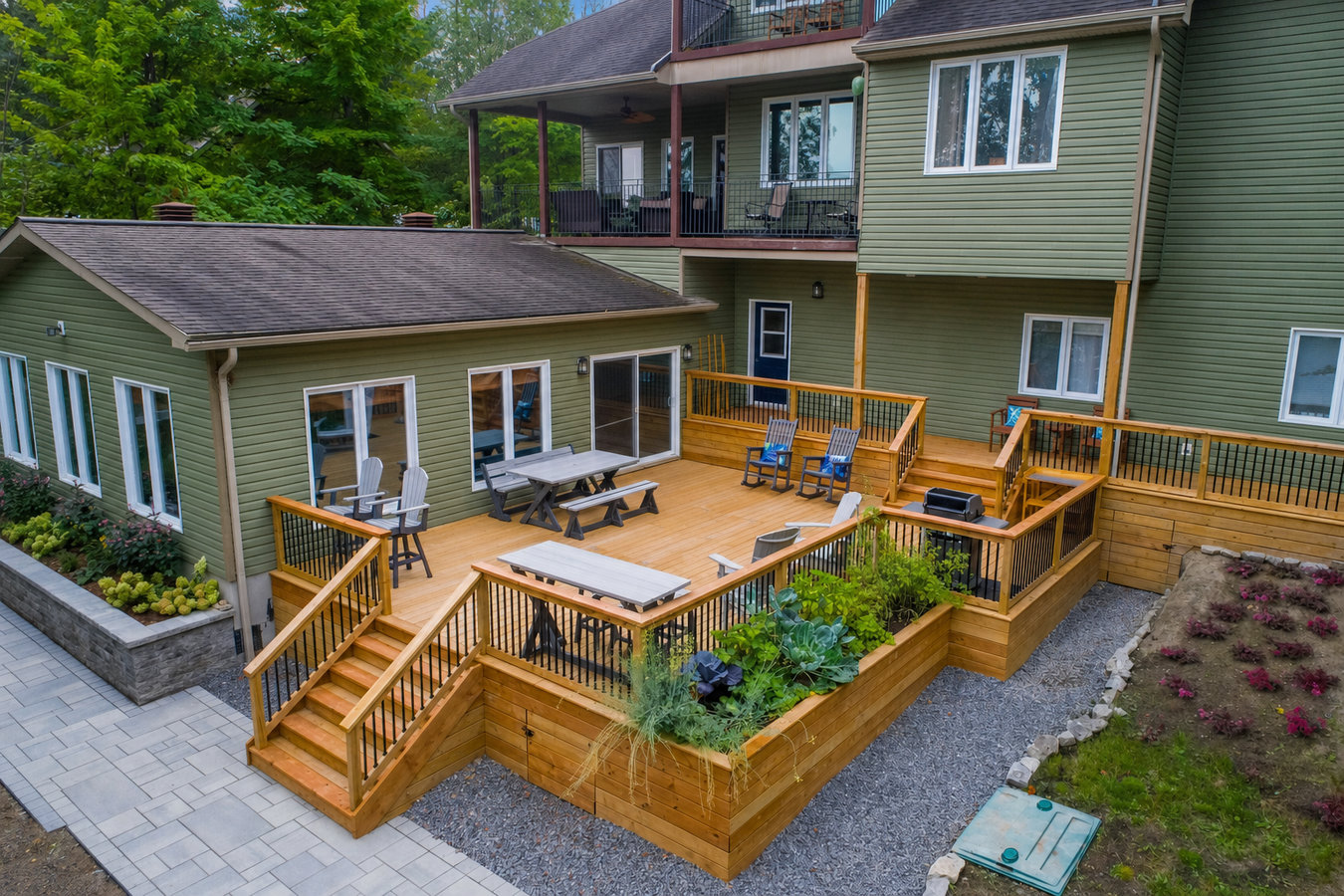
Sloped lots, crowded single-level decks, and central Pennsylvania winters - we design and build multi-level decks that turn problem yards into your best outdoor space, with frost-depth footings and full permit handling.
Multi-level decks in State College, PA are two or more connected deck platforms built at different heights - linked by stairs or landings so you get separate outdoor spaces without flattening your yard or losing usable ground. Most two-level projects take one to three weeks of active construction, with an additional two to four weeks for permit review before the first board goes down.
If your backyard slopes away from the house - and many lots in the Nittany Valley do - a single flat deck ends up floating awkwardly in the air on one side. A multi-level design uses that slope as an advantage, stepping down with the grade so each platform feels close to the ground. The result is a yard that looks intentional and works better for how you actually live outside. If you are starting from a blank yard and want to shape the full design, our custom deck design and build service covers the full process from initial layout to final inspection.
If you step outside and the ground drops off quickly - even just three or four feet over a short distance - a single flat deck ends up sitting awkwardly in the air on one side. A multi-level design steps down with the yard, so each platform sits close to the ground and the whole structure feels connected to the landscape. This is one of the most common reasons State College homeowners on hillside lots choose multi-level over single-level.
If your current deck or patio feels crowded because the grill, the dining table, and the lounge chairs are all fighting for the same square footage, you need more defined zones. A second level gives you a dedicated space for each activity without expanding your footprint into the yard. Many homeowners describe this as the single biggest quality-of-life improvement they made to their home.
If boards have started to cup, crack, or feel spongy underfoot - especially near the ledger board where the deck meets the house - that is a sign the structure may be at or near the end of its useful life. State College winters are hard on wood. Rather than patching an aging single-level deck, many homeowners use this moment to rebuild with a multi-level design that better fits how they actually use the space.
Hot tubs are heavy - a filled tub can weigh 4,000 to 6,000 pounds - and most existing decks are not built to carry that load. A multi-level rebuild gives you the opportunity to engineer a dedicated lower platform with the right footing size and framing depth to safely support a hot tub, rather than trying to retrofit a structure that was never designed for it.
We build two-level and three-level decks from the ground up - footings, structural framing, decking surface, stairs, and railings - all permitted and inspected through the correct local municipality. For the decking surface, composite materials hold up better through central Pennsylvania freeze-thaw cycles than untreated wood and eliminate the annual staining cycle that pressure-treated decks require. For any project that also needs proper railing to code, our deck railing installation service is handled as part of the same project so everything is designed and inspected together.
Homeowners who want a full starting-point design - choosing layout, materials, levels, and built-in features before a single footing is dug - start with our custom deck design and build process. We work through your site conditions, your slope, and how you use your outdoor space before committing anything to a written scope.
Best for yards that drop away from the house - each platform steps down with the grade so the structure feels natural and connected to the landscape.
Best for larger yards where cooking, dining, and lounging each deserve their own space without everything crowding together.
Best for homeowners who want a lower level engineered to safely carry the weight of a filled hot tub - framing and footings sized for the load from the start.
Best for homeowners who want a low-maintenance surface that holds up through central Pennsylvania freeze-thaw cycles without annual staining or sealing.
State College and the surrounding townships sit in the Nittany Valley, surrounded by Appalachian ridges, and the terrain shows up directly in residential lots. Many homes - especially in hillside neighborhoods and on the streets that climb away from campus - have grade changes of several feet from the back door to the far edge of the yard. A single flat deck on one of these lots would either hover in the air on posts or require expensive grading. A multi-level design steps down with the natural slope, turning that grade change into separate, connected outdoor rooms instead of a structural problem to solve. Homeowners in Lemont and Boalsburg deal with these same lot conditions and benefit from this approach regularly.
The other local factor that shapes this work is Central Pennsylvania winters. The ground here freezes to roughly 36 inches most years, and that frost depth is not negotiable - it is the minimum footing depth required to keep posts from heaving and shifting as the seasons change. It also affects scheduling: concrete footings should not be poured when overnight temperatures are expected to drop below freezing, which limits reliable outdoor construction to roughly April through October. State College deck builders fill up fast every spring, so starting conversations in February or March is not early - it is realistic planning for a summer build.
We ask a few questions about your yard, its slope, and what you want from the space. You do not need all the answers ready - just describe what you are working with. We reply within one business day and schedule an in-person visit.
We walk your yard, measure the grade, assess the footing locations, and talk through your layout ideas. Most homeowners in the State College area receive a written, itemized estimate within one to two weeks of the site visit.
Once you sign a contract, we submit the permit application to your local municipality - State College Borough, Ferguson Township, or whichever Centre County office covers your address. Permit review typically takes two to four weeks.
Footings go in first and are inspected before concrete is poured. The frame, decking surface, stairs, and railings follow. A municipal inspector signs off at completion - we coordinate the visit so you do not have to.
Free estimate, no obligation. We reply within one business day.
(814) 996-0130The ground in State College freezes to roughly 36 inches in a typical winter. Every post we set is anchored below that depth so the deck stays level through the full freeze-thaw cycle. This is checked by a local inspector before the concrete is poured - not something we can shortcut.
Many State College lots - especially in hillside neighborhoods and areas near campus - have significant grade changes. We have built multi-level decks on these lots and know how to lay out footings, adjust framing heights, and design stairs that make a sloped yard feel like an asset, not a problem.
We handle the application, drawings, submission, and inspection scheduling from start to finish. You will know where things stand at every step, and you will never have to call the building office yourself. Permits are not optional on a structural project like this - and we never suggest skipping them.
Every estimate we provide breaks down the size of each level, the footing plan, the materials, and what is included in cleanup and final inspection. The North American Deck and Railing Association recommends detailed written scopes for structural projects - we follow that standard on every job.
Every multi-level deck we build in the State College area is framed to local frost-depth requirements, permitted through the correct municipality, and inspected before you use it. That combination - local knowledge, proper footings, and a clean permit trail - is what protects your investment for the long term.
For authoritative guidance on residential deck construction standards, see the North American Deck and Railing Association and Pennsylvania Uniform Construction Code. For utility locating before any excavation, contact Pennsylvania One Call (PA 811).
Safe, code-compliant railings for every level of your multi-level deck - wood, composite, or aluminum, all permitted and inspected.
Learn MoreStart from a blank yard and design the exact multi-level layout that fits your home, your slope, and how you use the space.
Learn MoreState College deck builders book up fast every spring - locking in your start date now means your deck is ready before summer, not after it.